

719-357-7591
We generate Zero Waste in comparison to traditional concrete manufacturing that relies heavily on simple and complex molds that eventually end up becoming waste.
It's a standard practice to order 10% more material than is needed for the job in construction. This applies to almost every category of material: lumber, flooring, sheathing, decking, tile, drywall, etc. The issue is that when buying boards or sheets, those get cut to fit to fit into the place where they will be used on the site. What happens to the cut-off sections? Well, a good builder will plan to use the scraps as best they can, but in the end, about 10% of all the material goes into the landfill. It never becomes part of the building.
A study on construction waste1 was conducted in March of 2022 showed:
Construction waste constitutes approximately 10–30% of waste disposed of at landfill sites around the world2,3 Further studies has show that civil works and building construction consume 60% of raw materials, with building projects accounting for 40% of this volume. In addition, the construction industry produces approximately 35% of total waste to the environment globally4,5.
Material waste also has a negative economic impact by contributing additional costs to projects6. For instance, the contribution of construction waste to the total project cost overrun is 30% of the total cost of materials7, approximately 10–15% of purchased materials for the construction of a project is recorded as a waste8. In this regard, construction waste has been argued to be one of the main causes of economic reduction and business failure in the construction sectors9,10.
The study also mentions that in many countries, it can lead to illegal dumping and public health safety risks.
So how does concrete 3D printing help fix construction waste?
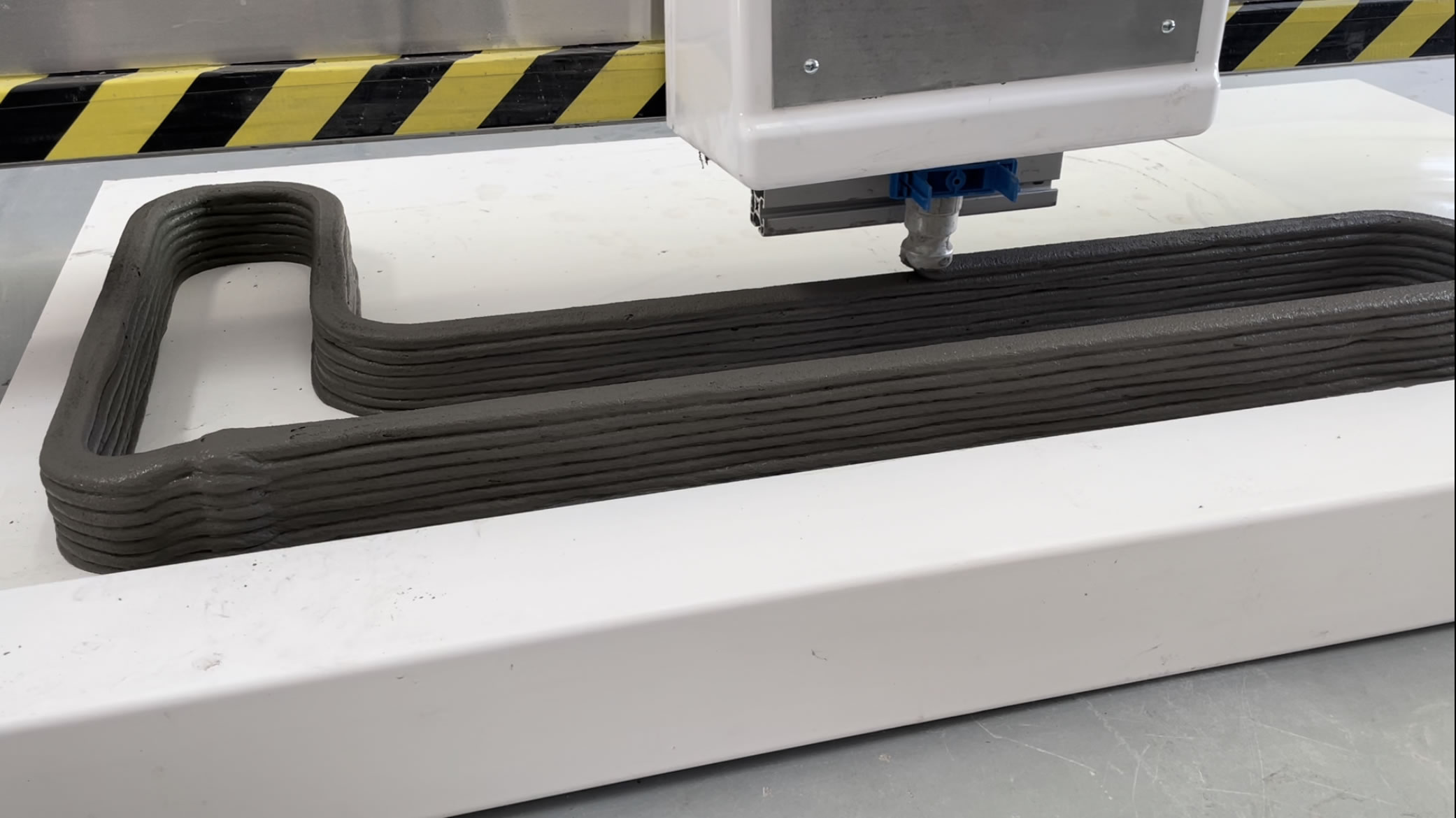
It lies in the manner in which the material is used. Since the process is automated, the dry material is not mixed until it is needed by the printer. The printer, then creates the shapes defined for the project while only depositing the needed material. This additive manufacturing method is much more efficient than the subtractive method of cutting sheet and boards to fit into the desired form. So effectively, with 3DCP, you save 10% on materials immediately.
We generate Zero Waste in comparison to traditional concrete manufacturing which relies on simple and complex molds that eventually end up becoming waste.
We generate Zero Waste in comparison to traditional concrete manufacturing that relies heavily on simple and complex molds that eventually end up becoming waste.
In addition, there's more material savings in comparison to casting concrete in the traditional method, because the printed elements can fill the same role, but not be made out of one solid pour of concrete. Instead, the printed part can be hollow with just the necessary reinforcement printed and unnecessary parts of the structure removed. The process for removing the unnecessary parts is called topology optimization.
Topology optimization combined with 3D printing can result in less weight, improved structural performance and shortened design-to-manufacturing cycle. As the designs, while efficient, might not be realizable with more traditional manufacturing techniques
Topology optimization can save up to 80% of the material previously used in structural elements without sacrificing the strength. It becomes very important to use less material in the creation of buildings from a cost perspective, but also it becomes a waste management issue when the building is destroyed.
Apart from the 10% waste in materials during construction, there's an additional source of waste that accounts for 9 times that amount: 90% of waste in the construction industry comes from the demolition of existing buildings. Demolition waste is nearly the single greatest contributor to landfills. Data provided by 24 states reported that solid waste from construction and demolition (C&D) accounts for 23% of total waste in the U.S.[6]
The reasons for demolition waste are varied, but a large portion of buildings demolished were no longer habitable due to the following issues: poor foundation, mold infestation, termite infestation, damage caused due to fire, exterior skin, roofing and other construction materials are deteriorating.
Building with a more durable and long lasting material will help us avoid demolishing buildings and reduce the waste issues as we move into the future.
Sources:


